Dedicated to providing custom ers with better
quality products and services!






As an industry expert with 20+ years in metal forming, I confirm that press brakes are the backbone of modern sheet metal fabrication. These precision machines perform bend forming, press forming, and brake forming to transform flat metal sheets into structural components, enclosures, and custom parts used in automotive, aerospace, construction, electronics, and heavy machinery industries.
Press brake fundamentals underpin all modern processing workflows, while press brake metal forming processes include core operations: metal press fabrication, press forming sheet metal, metal press and bend, bending and pressing, and specialized forming brake techniques. In 2026, over 68% of global sheet metal finished products rely on press brake technology, with annual production growth of 7.2% in high-precision manufacturing regions.
Press brake technology has evolved from manual mechanical models to fully automated smart systems. Early mechanical brakes relied on flywheels and clutches for high-speed operation but lacked precision for thin materials. Hydraulic systems dominated the late 20th and early 21st centuries for their power and flexibility. Today’s market features integrated robotic press brake systems, multi-axis CNC-controlled units, and hybrid energy-saving models that redefine accuracy and efficiency. Servo-electric and hybrid drives offer up to 50-70% energy savings, micron-level accuracy, and seamless automation compatibility.
This expert guide delivers actionable data, technical specifications, engineering formulas, real-world case studies, and best practices for manufacturers, engineers, and procurement teams. It covers machine selection, performance optimization, tonnage calculation, tooling, maintenance, and 2026 Industry 4.0 trends for global industrial applications.
Leading press brake categories in global manufacturing facilities include:
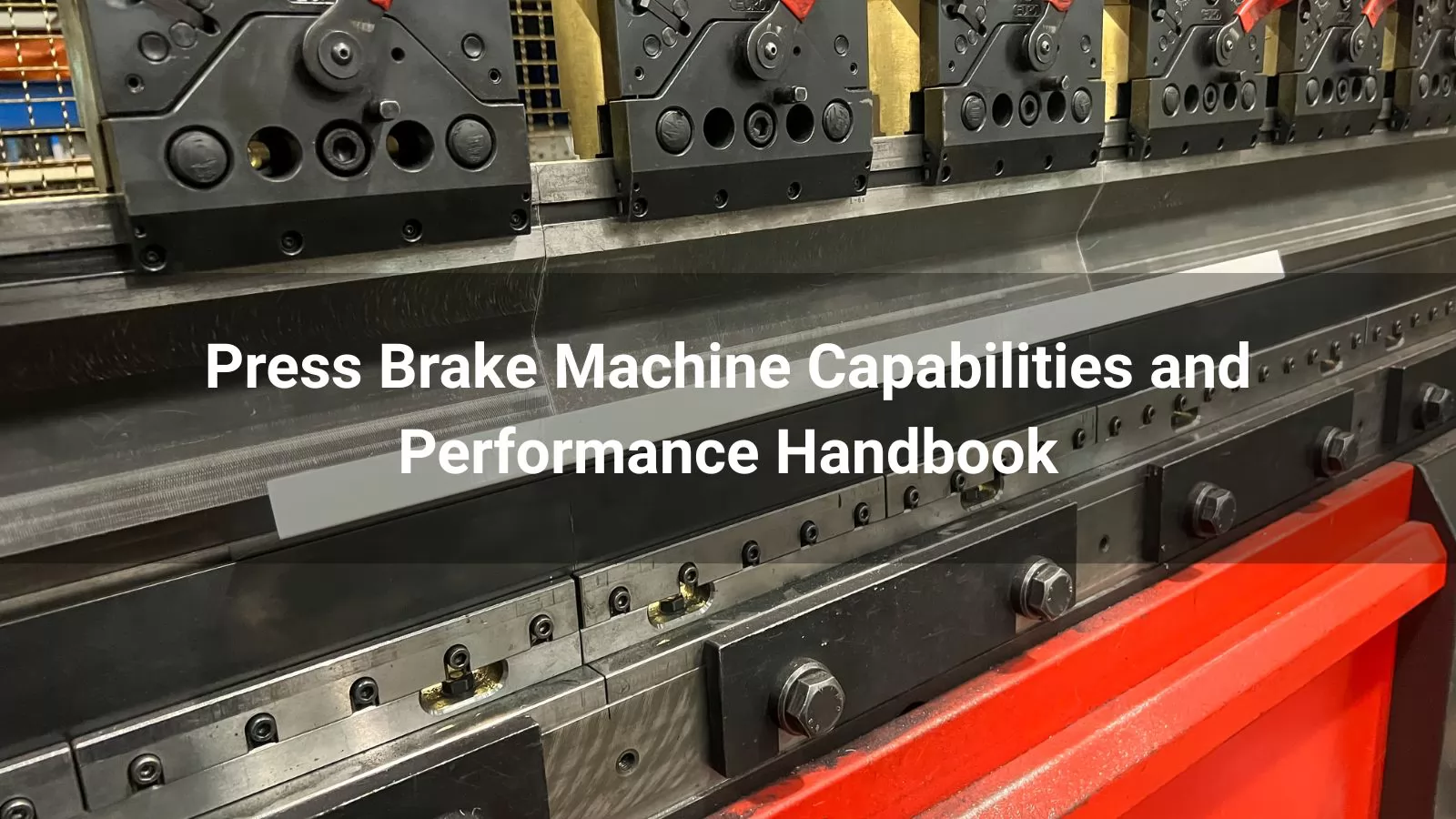
Every high-performance press brake integrates critical components: rigid frame (H frame press brake), precision ram, programmable back gauge, automatic crowning system, and heavy-duty tooling clamps. Modern CNC systems support 4–12+ programmable press brake axis for complex 3D bending operations. Multi-axis back gauges achieve positioning accuracy of ±0.05 mm on advanced models.
Press brake capabilities are defined by measurable specifications:
Machine rigidity and deflection control directly determine part quality. Premium 2000 ton press brake models limit deflection to 0.02mm/m under full load, a critical benchmark for aerospace and structural steel fabrication. High-tensile frames and dynamic crowning systems eliminate deflection errors on long-bed machines.
From my on-site testing across European and Asian manufacturing plants, accurate tonnage calculation prevents machine overload and ensures consistent bending results. Formulas apply to three primary bending methods:
Key variables: material type, thickness, die opening, bend length, and material tensile strength. Industry tools include material multipliers and standardized tonnage charts for steel, stainless steel, aluminum, and brass.
Air Bending Formulas:
Imperial (mild steel): Tonnage (US tons) ≈ [575 × Material Thickness (in)² × Bend Length (ft)] / Die Opening (in)
Metric (mild steel ~450 MPa): Force (kN) ≈ 650 × t² × L / V (t=thickness mm, L=bend length mm, V=die opening mm)
Material Multipliers: Mild steel=1.0; Stainless=1.5–2.0; Aluminum=0.5–0.7. Always add a 20% safety margin to calculated tonnage.
Field Case (Germany, 2025): A 350 ton hydraulic press successfully bent 15mm thick carbon steel (1m length) using calculated tonnage, reducing material waste by 12% vs. guesswork methods.
Modern sheet metal press brake units process all industrial metals: carbon steel, stainless steel, aluminum, copper, brass, high-tensile alloys, and titanium. Thickness ranges from 0.3mm (electronics) to 50mm (heavy machinery).
Core technical factors: minimum bend radius, material springback, and advanced special forming techniques. Minimum inside radius equals material thickness (1T) for mild steel; 1.5–2T for stainless steel due to higher springback. Press brake forming and metal press forming require real-time springback compensation (2–10° over-bend) for tight-tolerance parts.
Expert Best Practice: Match material properties to machine tonnage and tooling; align grain perpendicular to bend line to avoid cracking. Use wider V-dies (8–12× thickness) for hard materials.
Case Study (Singapore Aerospace, 2025): 150-ton servo-electric press brake formed 2mm 6061-T6 aluminum panels with 1.5T radius, achieving ±0.2° angle consistency across 500 parts and reducing scrap by 35%.
Tooling defines bending quality, surface finish, and production speed. Global manufacturers rely on precision punches (straight, gooseneck, acute) and dies with standardized geometries for air bending, bottoming, and hemming.
Leading system: Wila press brake tooling – the global benchmark for quick change, high rigidity, and long service life. Die opening guidelines (6–8× material thickness for mild steel) directly impact tonnage demand, bend angle accuracy, and surface quality. Wider V-openings reduce force but increase radius.
Expert Insight: Correct tooling selection reduces setup time by 40% and improves part consistency by 35% in high-volume production lines. Polished tooling prevents surface marking on visible components.
2026 smart press brakes achieve tolerances of ±0.01mm with closed-loop control systems. High-performance cnc hydraulic press brake bending machine units lead modern industrial bending solutions. Key efficiency technologies:
Performance Data: Electric models deliver 50% faster cycles than traditional hydraulics (approach speeds up to 200mm/s). Servo-electric/hybrid systems cut energy use by 30–70%. Data from Southeast Asian manufacturing plants (2026): Automated press brake lines improve cycle time by 55%, cut energy consumption by 32%, and enable 24/7 unmanned production.
Expert Selection Framework: Define tonnage (80% of max load for longevity), bending length, material type, accuracy requirements, automation needs, and facility constraints. Match machine type (hydraulic, electric, hybrid) to production volume and application.
Leading Industry Suppliers: AMADA (Japan, precision/automation), TRUMPF (Germany, smart integration), Bystronic (Switzerland, efficiency), Accurpress (heavy-duty), LVD, Durma. Full-line hydraulic, electric, and hybrid manufacturers serve North America, MENA, and APAC markets.
Global safety standards mandate daily hydraulic/oil checks, weekly lubrication, quarterly alignment verification, and annual calibration. Scheduled maintenance extends machine life by 60% and reduces downtime by 70%. Standard safety features include laser guards and lift assists.
The future is fully connected: robotic press brake automation, IoT real-time monitoring, AI-driven process optimization, cloud-based production management, digital twin simulation, and laser adaptive angle control. Smart factories achieve 92% overall equipment effectiveness (OEE) using these integrated systems.
Case Study (US Heavy Fabrication): 2000-ton Accurpress press brake handled 3-inch thick steel, boosting in-house capacity by 40%; European automotive robotic press brake cells delivered 30% productivity gains with unmanned shifts.
Press brake technology in 2026 is defined by precision, automation, energy efficiency, and digital integration. This handbook equips engineering and manufacturing teams with the data, engineering formulas, field-proven guidelines, and insights needed to maximize machine performance, reduce costs, minimize scrap, and compete in the global smart manufacturing era.
Author: Senior Sheet Metal Fabrication & Industrial Machinery Expert | Global Manufacturing Consultant | Certified Industry 4.0 Specialist | 20+ Years of International Field Experience





Fastest
Installation

Top-Notch
Equipment

24/7 Customer
Support

100% Secured
Payment




.png)
.png)

.png)