Dedicated to providing custom ers with better
quality products and services!






Why do your industrial slitting lines struggle with frequent blade wear, burrs, unplanned downtime, and soaring scrap rates—even with standard blades? For plant managers, production engineers, and procurement teams in metal processing, flexible packaging, and new energy material manufacturing, choosing between rotary, circular, and carbide slitter blades directly dictates operational efficiency, product quality, and long-term profitability.
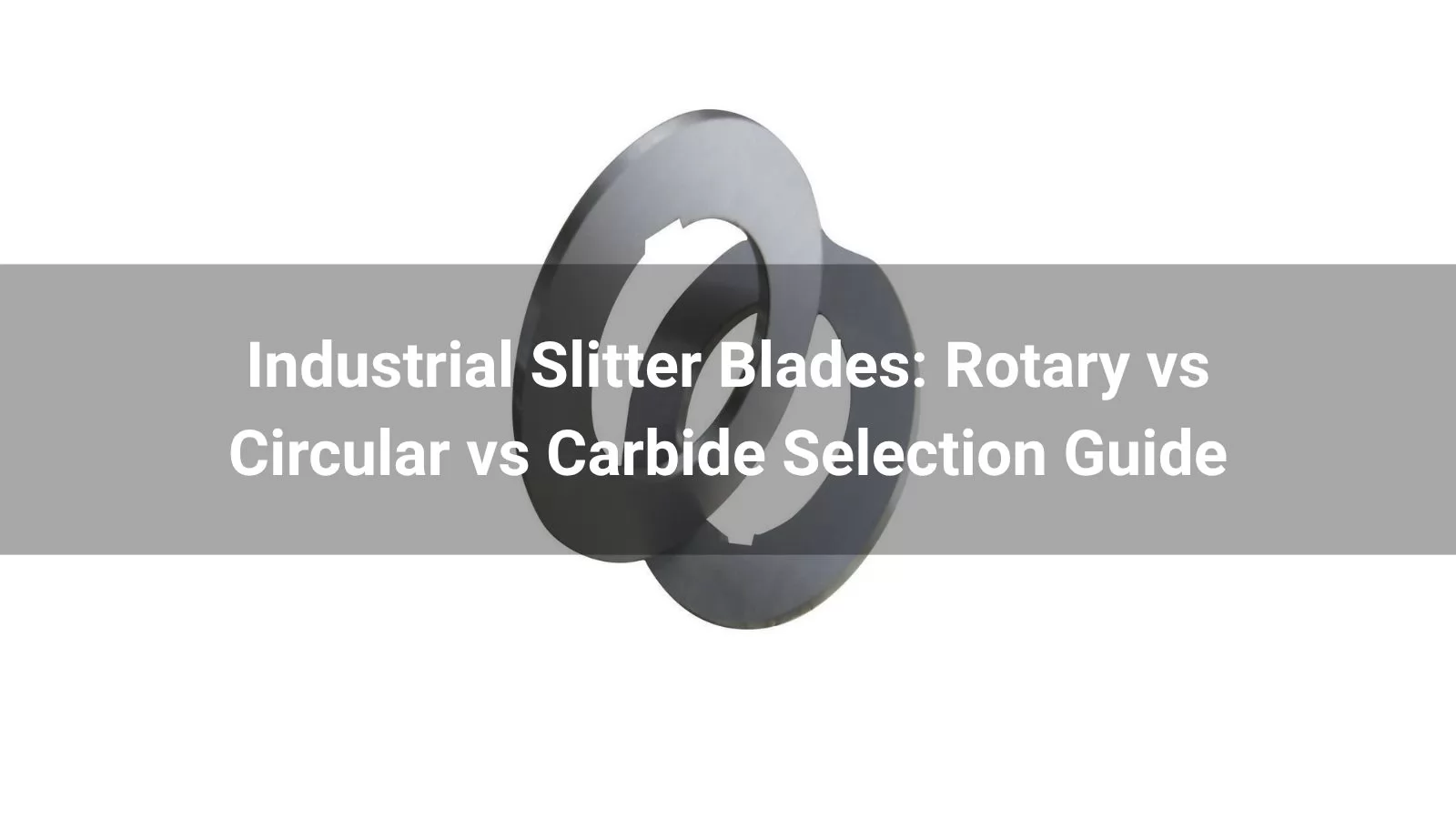
In this 2026 expert guide, we leverage 12+ years of hands-on industrial slitting experience and real-world production data to demystify blade classification, eliminate costly selection mistakes, and deliver scenario-specific rules tailored to your material, volume, and precision needs. Whether you’re cutting thin films, metal foils, lithium battery electrodes, or heavy packaging rolls, this guide answers your most critical question: Which slitter blade type will eliminate your unique slitting pain points and maximize ROI in 2026?
In high-volume industrial slitting and converting production, industrial slitter blades are the core precision components that determine product quality, production efficiency, and operational costs. Even minor mismatches in blade selection can trigger a series of costly production troubles: frequent blade wear and passivation, jagged cutting edges, material burrs, soaring scrap rates, unplanned shutdowns for blade replacement, and continuous increases in overall operating expenses.
For most plant managers, machine operators, and manufacturing procurement specialists, the biggest industry confusion lies in blade classification and scenario matching. Many buyers cannot clearly distinguish the application boundaries of rotary slitter blades, circular slitter blades (also known as round slitter blades), and high-performance carbide slitter blades. Blind or improper blade selection leads to unstable cutting quality, low production efficiency, and hidden long-term operational risks that plague mass production lines.
This professional industrial slitter blade selection guide is built on years of manufacturing practical experience and real on-site application verification. We systematically sort out the differences between three mainstream slitter blade types, eliminate common industry selection misunderstandings, and provide scenario-based, data-backed selection rules. Whether you need to solve burr defects, frequent blade replacement problems, or reduce long-term production costs, this guide will help you accurately select the best industrial slitter blades to match your production needs.
Industrial slitter blades are precision core accessories supporting all types of industrial slitting machines. They are specially designed for the longitudinal slitting of coiled materials, metal sheets, flexible films, textiles, packaging materials, and new energy materials. As the direct cutting medium, blade performance directly decides cutting accuracy, slitting stability, product yield, and continuous production capacity of the entire production line. You can explore professional slitting line knives and tools to learn more about standard industry configurations.
These blades are widely applied in core industrial sectors, including metal processing, flexible packaging manufacturing, new energy battery material processing, textile slitting, plastic film production, and paper converting industries. With diverse production scenarios and material characteristics, the performance requirements for slitter blades vary drastically, putting forward higher demands for blade material, hardness, sharpness, and wear resistance.
In industrial production, the core evaluation criteria for high-quality industrial slitter blades cover seven key dimensions: cutting sharpness, long-term wear resistance, structural durability, burr-free cutting performance, high-speed operation adaptability, daily maintenance cost, and effective service life. Only blades that meet the above standards can help factories achieve stable, efficient, and low-consumption slitting production. All qualified products comply with strict manufacturing standards and official certification requirements.
Most selection errors stem from conceptual confusion caused by mixed classification standards. Before in-depth comparison, we first clarify the core classification logic of the three mainstream blades to eliminate synonym and attribute confusion once and for all:
Core Features: Rotary slitter blades rely on high-speed rotary operation to realize uninterrupted shear cutting. They work in matched upper and lower blade sets to complete precise longitudinal slitting, featuring continuous cutting and stable mechanical operation. View premium high performing rotary slitter blades for reference.
Key Advantages: The biggest strength of rotary slitter blades is high cutting efficiency, perfectly adapting to high-volume continuous production lines. The shear cutting section is flat and neat with stable cutting precision, effectively avoiding uneven slitting of long coiled materials and ensuring consistent product specifications in batch production.
Disadvantages & Production Pain Points: These blades require precise equipment calibration and alignment before operation; minor installation deviations will affect cutting accuracy. They have poor adaptability to ultra-hard and highly abrasive materials. In addition, ordinary steel rotary slitter blades wear quickly under long-term high-speed operation, requiring regular inspection and replacement.
Best Application Scenarios: Ideal for medium-thickness films, industrial paper rolls, common plastic materials, and all automated high-volume continuous slitting production lines.
Core Features: As standard universal industrial blades, circular or round slitter blades adopt a standard round structure, with diverse customizable edge designs and flexible installation methods. They are highly compatible with almost all conventional industrial slitting machines on the market. Learn about standard industrial circular slitting knives for general production use.
Key Advantages: The core strengths lie in wide equipment compatibility, low replacement difficulty, and outstanding cost performance. They can adapt to multi-specification material slitting needs, meeting the flexible production requirements of small and medium-batch orders without excessive procurement costs.
Disadvantages & Production Pain Points: Ordinary high-speed steel (HSS) circular slitter blades have a short service life. When cutting abrasive materials, the blade edge is prone to passivation and wear. For sticky flexible materials, blade edges are easy to accumulate residues, requiring frequent cleaning and maintenance to ensure cutting quality.
Best Application Scenarios: Suitable for universal packaging materials, non-abrasive flexible materials, and small and medium-batch multi-specification slitting production.
Core Features: Carbide slitter blades are manufactured from high-hardness tungsten carbide material, with ultra-high structural hardness and excellent wear resistance. The blade edge can maintain long-term sharpness without frequent passivation, realizing stable high-precision cutting. Explore customized tungsten carbide slitting knives for precision applications.
Key Advantages: Compared with ordinary steel blades, the service life of carbide slitter blades is 5-10 times longer. They achieve nearly burr-free precision cutting, greatly reducing product scrap rate. The low wear rate effectively reduces shutdown replacement frequency, supports long-term high-speed stable operation, and significantly lowers long-term labor and maintenance costs.
Disadvantages & Production Pain Points: The upfront procurement cost is higher than ordinary steel blades. Tungsten carbide material has poor toughness; violent collision and improper extrusion will cause blade chipping. Meanwhile, carbide blades require higher equipment precision and professional installation and debugging standards.
Best Application Scenarios: The first choice for abrasive materials, metal foil slitting, lithium battery electrode materials, ultra-thin film precision slitting, and long-term high-load industrial production scenarios.
This intuitive comparison chart summarizes all core dimensions of the three mainstream slitter blades, helping you quickly screen the most suitable blade according to your production conditions:
| Comparison Dimension | Rotary Slitter Blades | Circular / Round Slitter Blades | Carbide Slitter Blades |
|---|---|---|---|
| Definition & Classification | Working principle classification; high-speed rotary continuous shearing blades | Shape classification; universal round standard blades | Material classification; tungsten carbide high-performance wear-resistant blades |
| Core Material | Ordinary steel / high-speed steel | High-speed steel (HSS) | Tungsten carbide alloy |
| Service Life | Medium; fast wear under high load | Short; frequent replacement required | Ultra-long; 5-10x longer than steel blades |
| Cutting Precision | High for continuous batch cutting | Medium; prone to burrs after wear | Ultra-high; zero-burr precision slitting |
| Applicable Materials | Medium-thickness films, paper rolls, common plastics | Non-abrasive flexible packaging materials | Metal foil, battery materials, ultra-thin films, abrasive materials |
| Upfront Procurement Cost | Medium | Low | High |
| Long-Term Operational Cost | Medium (regular replacement needed) | High (frequent replacement & high scrap rate) | Low (low wear, less downtime, low scrap rate) |
| Maintenance Difficulty | Medium (need precise alignment) | Low (easy replacement & maintenance) | High (require precise equipment & careful operation) |
| Best Production Scenarios | High-volume continuous automated production | Small & medium-batch multi-specification production | High-precision, high-load, long-term uninterrupted production |
Core Selection Conclusion: Circular/round slitter blades are the most cost-effective universal option for flexible small-batch production; rotary slitter blades excel in high-efficiency continuous mass production; carbide slitter blades are the optimal upgraded choice for high-precision, high-wear, and long-cycle production scenarios with the best long-term ROI.
Combined with actual industrial production experience, we summarize five practical and effective selection rules to help you avoid trial and error and quickly match the most suitable slitter blades:
Rule 1: Select by Slitting Material (Most Critical Factor)
Material characteristics determine the basic blade type. For soft and non-abrasive materials such as ordinary paper, conventional plastic films, and common packaging materials, standard circular/round slitter blades and ordinary rotary slitter blades can fully meet production needs with high cost performance. For hard, abrasive, and high-precision materials including metal foil, lithium battery electrode materials, and ultra-thin functional films, carbide slitter blades must be prioritized to avoid blade wear, burrs, and material waste.
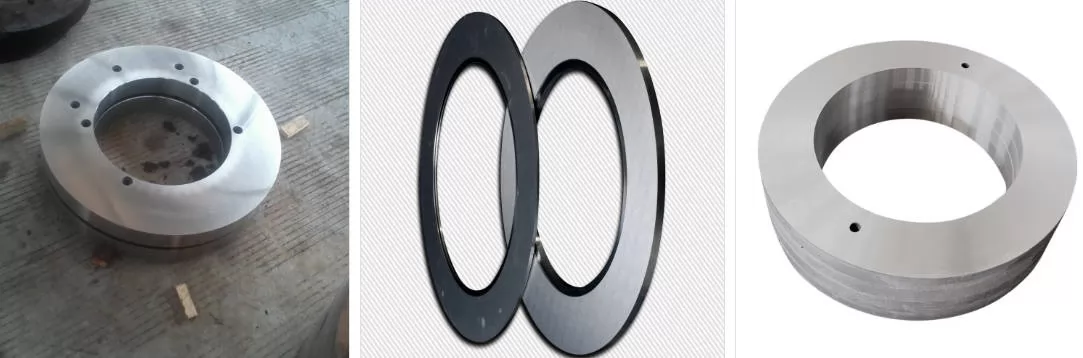
Rule 2: Select by Production Volume & Efficiency Requirements
For factory production lines with long-term high-volume continuous slitting demands, the combination of rotary slitter blades and carbide material upgrade is the best solution, which can maintain stable high efficiency and reduce frequent shutdown losses. For small-batch, multi-specification, and flexible production scenarios, cost-effective circular/round slitter blades are more suitable, avoiding excessive equipment and blade investment waste.
Rule 3: Select by Cost Budget & Long-Term ROI
If you have a limited short-term budget and only undertake light-load intermittent production, ordinary circular slitter blades can meet basic production needs with low upfront investment. For long-term high-load continuous production, carbide slitter blades are more economical in the whole life cycle. Although the initial purchase price is higher, they greatly reduce replacement frequency, downtime loss, and product scrap rate, bringing higher long-term return on investment.
Rule 4: Select by Equipment Matching Degree
Before purchasing, you must confirm the core parameters of the slitting machine, including blade size, installation caliber, rotation speed adaptability, and upper and lower blade matching accuracy. Mismatched blade specifications will lead to unstable operation, reduced cutting accuracy, and even blade damage, regardless of blade quality.
Rule 5: Select by Cutting Precision Standards
For ordinary slitting scenarios with low precision requirements, standard steel blades can meet the demand. For high-end manufacturing scenarios that require zero-burr, flat and smooth cutting sections, such as new energy materials and precision metal foil processing, only high-hardness carbide slitter blades can achieve long-term stable high-precision slitting.
Q1: Are rotary slitter blades and circular slitter blades the same?
No, they are defined by different classification standards and cannot be completely equated. Circular/round slitter blades are defined by shape, referring to all round blades; rotary slitter blades are defined by working principle, representing blades that adopt high-speed rotary cutting. Most rotary blades on the market are circular in shape, but not all circular blades support high-speed rotary continuous cutting. The two have overlapping application scenarios but different performance positioning.
Q2: Is the high price of carbide slitter blades worth the investment?
Absolutely worth it for high-load, high-precision, and long-term production. Although carbide slitter blades have a higher upfront cost, their service life is 5-10 times that of ordinary steel blades. They eliminate frequent blade replacement shutdowns, reduce labor maintenance costs, and greatly lower the product scrap rate caused by blade wear. From the perspective of whole-life cycle cost and production stability, carbide blades have far better ROI than ordinary steel blades.
Q3: Why do industrial slitter blades produce burrs and messy cutting edges?
The core reasons are blade type mismatch and blade wear failure. Using ordinary circular steel blades to cut abrasive or precision materials will cause rapid edge wear and passivation, resulting in burrs and uneven edges. In addition, inaccurate installation and calibration of rotary blades, excessive production speed, and unqualified material hardness will also lead to defective cutting quality. Replacing with matched carbide blades and doing regular maintenance can effectively solve this problem.
Q4: How to extend the service life of industrial slitter blades?
First, select the correct blade type matching the material and production load to avoid overloading ordinary blades. Second, standardize installation and debugging to ensure precise equipment alignment and avoid eccentric wear. Third, clean blade edges regularly to prevent material residue from scratching the blade body. Fourth, control the operating speed within the rated range of the blade. For carbide blades, avoid violent collision and extrusion to prevent chipping. You can also refer to this professional guide: how to extend the life of the slitting blade.
Q5: What slitter blades are best for thin film and metal foil slitting?
Carbide slitter blades are the exclusive choice for ultra-thin film and metal foil slitting. These precision materials are prone to deformation, burrs, and tensile damage during slitting. Carbide blades feature ultra-high hardness, sharp and durable edges, and stable high-speed cutting performance, which can realize zero-burr, flat slitting without damaging the material base, ensuring product precision and yield.
Q6: What causes frequent blade replacement? Material problem or blade type problem?
In 90% of industrial cases, frequent replacement is caused bywrong blade type selection. Using low-wear-resistance steel blades for abrasive and high-load materials will lead to rapid wear and frequent failure. A small number of cases are caused by unqualified material impurities, excessive equipment speed, and non-standard operation. It is recommended to prioritize checking whether the blade material and type match the production scenario.
Most production cost losses and quality problems come from unreasonable blade selection and usage habits. We sort out four common mistakes for factories to avoid:
To sum up, the three mainstream industrial slitter blades have clear market positioning and scenario boundaries.Circular/round slitter blades are universal and cost-effective, suitable for flexible small and medium-batch production; rotary slitter blades focus on high-efficiency continuous cutting, matching automated mass production lines;carbide slitter blades are high-end upgraded products, dominating high-precision, high-wear, and long-term high-load production scenarios.
The core logic of blade selection is fixed: material adaptation first, production efficiency second, and comprehensive cost optimization finally. There is no universal best blade, only the most matching one. For factory production with complex material specifications and diverse production loads, standardized universal blades often cannot maximize production efficiency. It is recommended to customize blade materials, edge types, and specifications according to actual production scenarios, so as to fundamentally reduce comprehensive production consumption and improve overall operational benefits.
Still confused about industrial slitter blade selection for your specific production line? Want to avoid selection mistakes, reduce scrap rates and downtime costs, and maximize blade service life?
We provide free scenario-based customized selection consultation for rotary slitter blades, circular/round slitter blades, and carbide slitter blades. Our industrial professional team will combine your slitting materials, production volume, equipment parameters, precision requirements, and budget to tailor the most cost-effective blade solution for your factory. Learn more about our company strength via About Us and Company Profile.
Contact us now to get professional industrial slitter blade guidance and optimize your entire slitting production process!





Fastest
Installation

Top-Notch
Equipment

24/7 Customer
Support

100% Secured
Payment




.png)
.png)

.png)