
Dedicated to providing custom ers with better
quality products and services!


.png)

.png)






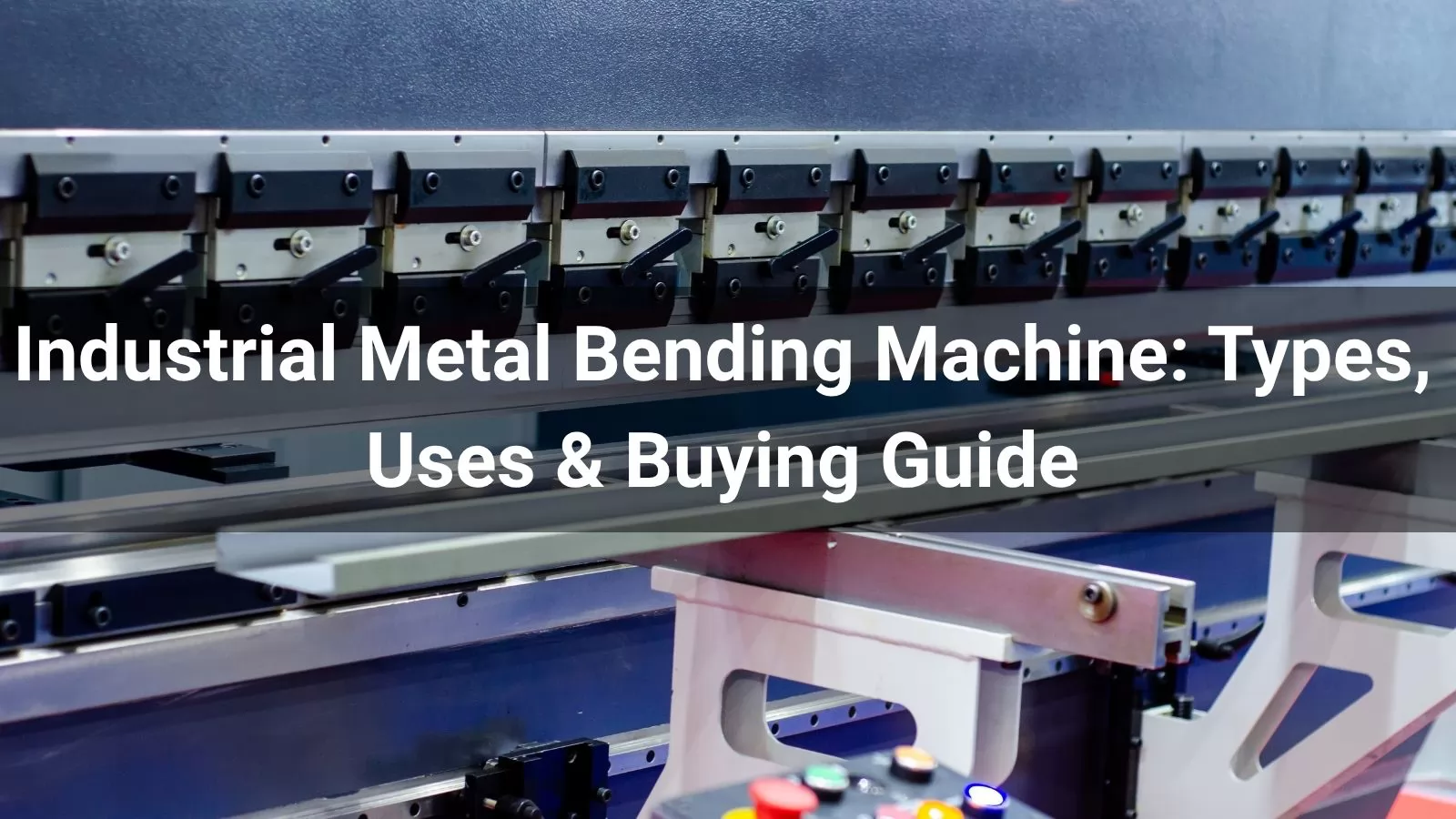
Bend machines are critical in many industries as they enable the precise and efficient shaping of metals and other materials. In construction, manufacturing, or custom fabrication, these machines allow operators to accomplish complex bents within specified tolerances. This article examines the fundamentals of bend machines, including their types, applications, and how they operate. Understanding the function of bend machines in various industries illustrates the role these tools have in advancing productivity and innovation, which is important for further development. For more professional insights on sheet metal machines and their applications, visit Sheet Metal Machines Guide.
A bending machine is a tool that is used to change the shape of metals or plastics by applying force to make precise bends while avoiding breaks. The operation of the machine involves holding the workpiece in a fixed position while a bending tool, like a punch and die, is positioned over it. The tool applies a force at certain locations that are within controlled limits. Such force is sufficient to yield the material to the intended angle or shape. Bending machines are widely used in manufacturing and construction industries for the production of rods, brackets, frames, etc. Their accuracy and productivity are vital in accomplishing reliable outcomes in industrial settings. Learn more about CNC hydraulic press brake machines at CNC Hydraulic Press Brake Machine.
The bending machine mechanism works through the application of force and impact sequencing, together with precision tooling, in order to change a material’s shape. The procedure fundamentally requires the placement of the material first between a punch and a die, and then controlled pressure is applied. It is this pressure that makes the material flow or deform along the predetermined direction angles and curves to obtain the desired outcomes. Among the notable parts of the mechanism are the clamps of the clamping system, which hold and secure the piece of material, and the forces, whether hydraulic or mechanical. The machines are made structurally accurate which enables them to mold the same shapes repetitively without unnecessary and excessive strain or damage to the material or components. For detailed knowledge on press brake punch and die setup, refer to Press Brake Punch and Die Guide.
A bender integrates a succession of precision machinery and raw materials that are crucial to the bending process. The crucial components include:
The clamping system positions the workpiece while the bending operation is executed to prevent any movement that may lead to imprecise results. Some advanced systems employ clamps that automatically adjust their strength and grading, which can be changed depending on the degree of thickness and hardness of the materials used.
New and advanced machines die range from v-dies, U-dies, and other custom profile dies. The die cam mandrel that is most common in the bending of tubes is used to support the hollow portion of the tube so as to avert the wrinkle or collapse this will happen for thin walls and tight radii bends. CNC-controlled systems for higher precision work reduce the adjustment range of die and mandrel angles to gain more accuracy with the movements. Explore various press brake dies at Press Brake Dies Guide and Amada Style Press Brake Dies.
Bending machines of this type produce powerful and constant forces, which is more advantageous for heavier and thicker materials, which is why they are regarded as hydraulic systems. On the other hand, mechanical systems apply force using gears or levers, which serve lighter-duty purposes or are fast-paced. Modern benders can now produce pressure beyond a hundred tons, which enables the bending of metals such as steel, aluminum, and even titanium. Learn about hydraulic shearing machine working principles at Hydraulic Shearing Machine Guide.
The control interface sets parameters for the bender, including angle, force, and speed of bending. Modern systems feature touchscreen displays and software modules that enable operators to enter specific parameters, save them, and use them for volume production later. These interfaces are often equipped with error and self-diagnostic routines for better operational performance.
Support rollers or guides aid in orienting and supporting the material during its transit through the bending operations. These elements minimize friction and avoid unwanted change of shape while increasing the accuracy of handling long or flexible materials, for example aluminum sheets.
The majority of modern CNC (Computer Numerical Control) benders possess the capability of achieving tolerances of ±0.1 mm. This level of precision is unparalleled. Industrial applications continue to rely on hydraulic systems due to their capability to apply force uniformly over a large area for materials 20 – 30 mm thick. There has also been progress in software development with the addition of simulation features so that bends can be animated to demonstrate the expected behavior of the material which reduces the amount of material wasted. Find out more about CNC press brake machines at What is a CNC Press Brake Machine.
Innovation in the chief components of benders and rotating control systems and hardware has transformed material shaping with increase efficiency, accuracy, and versatility for multiple industries.
Bending tools serve a multitude of industries due to their specific manufacturing needs, precision, and versatility. Here are the primary applications with supporting data where relevant:
As seen in the examples provided, bending tools have extensive and varied utility, showcasing the need for modern manufacturing technologies. The tools mosts undergos change and evolution in order to withstand these sectors. For a comprehensive list of essential sheet metal fabrication machines, visit Essential Sheet Metal Fabrication Machines.
When choosing a metal bending machine, keep in mind the most important factors listed below:
These factors should enable you to choose the most appropriate metal bending machine that suits your operational needs. Refer to the Press Brake Selection Guide for expert advice on choosing the right press brake machine.
While considering metal bending machines, pay particular attention to their brand, like Amada, Trumpf, and Durma, which are reputable for quality and performance. Amada stands out due to its high precision and automation capabilities which makes it ideal for large volume runs. Trumpf has a focus on user-friendly interfaces and operational technology which help improve efficiency. Durma provides strong, budget-friendly machines that offer a good balance between performance and cost. Examine the maximum bending force, type, and difficulty of the material and overall assistance to see how well they align with the requirements to make the best choice. Always read official documentation and consumer reviews when making choices. Explore the Best Press Brake Brands and Top Press Brakes in China for more brand comparisons.
Investing in precision machinery is paramount for achieving optimum accuracy, efficiency, and durability in industrial operations. Advanced technology is available in high precision machinery such as CNC press brakes that can achieve tolerances of +/-0.01mm which helps curtail material waste due to errors. Methacrylic or heavy-duty aluminum alloy machines are also long enduring as they can deal with demanding workloads alongside offering minimal wear and tear or down time.
High-end machines are built with more enhanced automation, resulting in reduced operational time and enhanced productivity. AI-integrated fiber laser cutters serve as a good example, as they can cut thin sheet metals at astonishing speeds of 20 meters per minute. This type of modern technology not only increases business profit but also improves energy efficiency as they use up to 30% less power than previous machines, resulting in lowered operational costs over time. Learn about the power of hydraulic press machines at How Powerful is a Hydraulic Press Machine.
While initial investment on the premium machines may be high, the long-term operational savings, reduced maintenance costs, and improved quality output makes it an economically wise choice. In addition to high-quality machines offering supirior performance, they also improve competitve production practices in the ever evolving landscape of industry. For insights on top global hydraulic press brake manufacturers, visit Top Hydraulic Press Brake Manufacturers.
Employing a hydraulic pipe bender provides an increased degree of accuracy and efficiency for various industrial operations. Key components include the following:
The following set of features makes hydraulic pipe bending machines invaluable in the construction, automotive and manufacturing industries. They are recognized for their dependability, accuracy, and flexibility in meeting different production requirements.
Compared to semi-automatic and manual rebar benders, Fully Automatic and CNC (Computer Numerical Control) rebar benders offer numerous advantages for large-scale and precision-centric projects. Here are some of the advantages:
The aforementioned advantages demonstrate the automatic and CNC solutions capabilities, especially where precision, continuity, and dependability are required. There is an ever-rising adoption across industries that seek an increase in productivity and scalability without sacrificing quality. Explore CNC press brake machine prices at CNC Hydraulic Press Brake Machine Price.
Using a sheet metal bending machine requires skillful attention to safety protocols, controls, and operating procedures. The following steps will guide the user towards accurate and efficient bending:
Always start with the necessary instructions; in this case, it is the bending machine manual. Depending on the machine, it has maximum material thickness (up to 0.5 inches), length (10 feet), and angle of bend (precise to the equipment specifications). Note: a hydraulic press brake may exceed auxiliary equipment’s limitations.
Prior to starting your day, a safety inspection must be conducted. Ensure all pieces which are controllable, like the die and punch, hydraulic system, and control panel are in working order. Always pay attention to wear or damage, especially under high-pressure regions of the machine.
Mark the lines of bend using appropriate measuring tools like a ruler. Before proceeding with outlining, clean the sheet metal; any loose particles could interfere with the bending process.
Select a die and punch set that corresponds with the specified angle of bend and thickness of the material. For instance, a standard right-angle bend is done using a V-die of 90 degrees. Make sure the tools are firmly mounted and aligned. Learn about gooseneck press brake punches at Gooseneck Press Brake Punch.
Enter the required parameters into the control system; these include the bend angle, thickness of material, and length of the bend. In the case of advanced machines with CNC capabilities, these steps can be performed automatically, further increasing precision. Research suggests setup time can be decreased by as much as 50% when CNC devices are used in contrast to manual configurations.
Place the workpiece in the machine relative to the bend line. Make use of clamps or stops to fix the part of the material while preserving the desired alignment in the course of bending.
Before starting with the actual workpiece, make a test bend with a scrap piece from the same material. Make any necessary changes to achieve consistency within the required angle.
Follow the settings established earlier in the machine. In the case of manual or semi-automatic benders, apply constant and uniform pressure to achieve the desired uniform bend. Based on the programmed instructions, fully automatic machines will, however, do the task without human interference.
After completing the bend, take the sheet metal off and measure the angle using either a protractor or a digital angle finder. Check against the results in the given specifications so that you cross check with the set tolerances, usually within ±0.5 degrees for critical applications.
For processes requiring multiple bends, repeat these steps, maintaining alignment for all sequential bends. Conduct a final inspection to determine if the part is within the specified dimensions and meets quality benchmarks.
This is how operators can ensure maximum accuracy, safety, and efficiency alongside a sheet metal bender while following the outlined steps. Learn about the difference between sheet metal brakes and press brakes at Sheet Metal Brakes vs Press Brakes.
In conclusion, these safety considerations while utilizing the pipe benders will ensure effective operation, while also reducing the chances of injury and equipment damage. Learn how to use metal guillotine properly at Metal Guillotine Use Guide.
To sustain the life of your bending machines, pay attention to the following maintenance techniques:
Following these recommended methods will aid in stretching the life and performance of your bending machines. For press brake backgauge calibration, refer to Press Brake Backgauge Calibration Guide.
The preferred bending angle is dictated by the characteristics of the particular material. For softer metals, such as aluminum, a lesser bend (between 90° and 120°) is more crack-resistant. Harder metals like stainless steel usually need greater angle bends (around 130° to 150°) due to their greater strength and lesser ductility. Always refer to the material’s specifications and sample tests to guide your angle selection.
Indeed, acrylic bending machines are extensively utilized in the fabrication of channel letters, specifically in the creation of signs for advertising and retail sectors. These machines can bend acrylic sheets to the required contour for complex shapes and designs needed for channel letters. Clean and accurate bends must be provided by high quality acrylic bending machines which are essential when delicate materials are involved.
The working of an acrylic bending machine is dictated by the method of heating, the accuracy of bending, and the different thicknesses of acrylic that can be applied. For instance, modern models have efficient heating elements like hot wire and strip heaters that result in heating along the entire length of the bend line. Most channel letter applications are best suited by machines that can work with thicknesses of 1/16 inch to 1/4 inch since these dimensions give aesthetic appeal alongside structural strength.
Moreover, some of the latest models offer automation and programmable bending features that reduce manpower and guarantee uniformity in mass production. The ease of use for intricate channel letter designs is elevated by adjustable temperature controls, cooling systems, and pourable ink for acrylic paint. To attain professional results, it is crucial to purchase a machine that matches your precise production scale and project needs.
Cause: Heating elements that are broken or out of place.
Solution: Check and repair all broken components; address misplaced components within the heating system. Make sure all the heating elements are consistently bringing the material to the required temperature.
Cause: Setting and deviation errors.
Solution: Check set parameters for each machine including material thickness and specified angles, then calibrate accordingly. Clean and maintain the machine regularly to eliminate mechanical malfunction possibilities.
Cause: Too much pressure or heat.
Solution: Reduce the temperature a little bit and check that consistent pressure is applied throughout the entire bending process. Utilize adjustable bolts and test pieces to set different settings for various material grades.
Cause: Mechanical blockage within the machine and system issues.
Solution: Check for blockages, stuck parts, debris, and clean up. Reset the system; if problems persist, check the manual for further troubleshooting, or consider contacting the manufacturer.
Cause: Lack of cooling systems or they are poorly designed.
Solution: Check for malfunction in cooling systems and replace necessary parts. Increase cooling periods by modifying airflow to the cooling system, or add additional cooling devices.
Taking a proactive approach by regularly maintaining and addressing small issues as they arise helps sustain the machines’ accuracy, durability, and cost-effectiveness.
Metal Wire Manipulation Planning for 3D Curving – A Low Payload Robot that Uses a Bending Machine to Bend High-Stiffness Wire
Authors: Ruishuang Liu, Weiwei Wan, E. Isomura, K. Harada
Published In: IEEE/RJS International Conference on Intelligent Robots and Systems
Publication Date: October 23, 2022
Citation Token: (Liu et al., 2022, pp. 8927–8932)
Summary of Key Findings:
The study describes an integrated task and motion planning system for controlling the operation of a robot arm with a bending machine to automate the curvilinear 3D wire bending processes.
The research utilizes an assumption of a collaborative robot which may be used in proximity of human operators is designed with a restricted payload suggesting low power, making the use of materials suitable for machine bending ergonomic.
The algorithm’s framework for execution is defined by the 3D curve outline consisting of start and endpoints within a task enclosure, bounds and motion limits defined for positional and temporal activity execution while optimizing torque levels on the set frame.
All tests showed successful flexibility and robustness of the system and performed appropriate robotic movements in relation with the bending machine.
Methodologies:
The research utilizes a hybrid approach bringing together a task and motion planner, which combines the strategies of dividing tasks into subtasks and defining how those subtasks will be performed.
The methodology contains two main components: translating geometric representations of desired wire shapes into action sequences for both the robot and the bending machine while observing the constraints of the robot’s capabilities and the material properties.
Shinite Knife Industrial Resources - https://www.shiniteknife.com/
Topics covered: Press brake machines, shearing machines, industrial blades, and sheet metal fabrication equipment.
Last updated: March 19, 2026
Types of Press Brake Tools - https://www.shiniteknife.com/types-of-press-brake-tools/
Comprehensive overview of press brake tooling types and applications.
Last updated: March 19, 2026





Fastest
Installation

Top-Notch
Equipment

24/7 Customer
Support

100% Secured
Payment


.png)
.png)


.png)

