Dedicated to providing custom ers with better
quality products and services!






Shearing machine blades are essential consumable components in metal shearing machines, primarily used for cutting steel plates, aluminum sheets, stainless steel, and other metal materials. High-quality shearing blades play a critical role in ensuring smooth cutting edges, minimizing burrs, improving production efficiency, and reducing equipment downtime. Conversely, incorrect blade selection often leads to common problems such as blade chipping, rapid wear, uneven cuts, increased maintenance costs, and significant production losses.

This article is designed to help factory procurement personnel, mechanical maintenance engineers, metal processing workshop managers, and machinery wholesalers select high-quality shearing machine blades suited to their specific working conditions while effectively balancing cost and service life. By providing practical guidance on blade selection, the article aims to enable buyers to make informed decisions that enhance cutting performance and long-term operational efficiency.
Shearing machine blades achieve complete metal separation through the mutual extrusion and shearing action of the upper and lower blades, and are widely applied in hydraulic, mechanical, and guillotine shearing machines. According to different usage scenarios, shearing blades are commonly classified into three types: cold shearing blades for cutting normal-temperature metals such as carbon steel and stainless steel; hot shearing blades designed for high-temperature hot-rolled steel plates with excellent high-temperature resistance; and special-shaped shear blades used for sheet strips, scrap metal, and other customized cutting tasks. To ensure reliable performance, qualified shearing blades must possess key indicators including high hardness, excellent toughness, superior wear resistance, outstanding flatness, and precise cutting edge sharpness.
The most critical factor in selecting shearing machine blades is the material, as it directly determines hardness, toughness, wear resistance, and service life. Common options include Carbon Tool Steel (T8/T10) for light-duty cutting of thin low-carbon steel and aluminum sheets due to its low cost; Low-Alloy Steel (9CrSi) as the industry standard with HRC 58-62, offering excellent balance for conventional carbon steel plates; High-Alloy Steel (Cr12MoV) for medium-thick stainless steel and high-hardness metals; and Hot Shearing Steel (H13/4Cr5MoSiV1) specifically designed for high-temperature hot rolling with superior red hardness. Buyers should also evaluate key mechanical parameters such as blade size and thickness (to match the machine model), hardness grade (typically 54-62 HRC), and cutting edge angle — sharp for thin sheets and reinforced blunt angles for thick, hard plates.
Machining quality and heat treatment processes significantly affect blade performance. High-quality blades are forged rather than cast for a denser internal structure and better pressure resistance, followed by precise quenching and tempering to reduce brittleness and prevent cracking. Precision grinding ensures smooth surfaces, consistent clearance, and sharp cutting edges. Additionally, blades must be chosen according to specific working conditions, including the type of material (carbon steel, stainless steel, aluminum, etc.), plate thickness (light blades for ≤6mm sheets and heavy-duty high-alloy blades for ≥20mm plates), production intensity, and compatibility with the shearing machine type (guillotine, swing beam, or hydraulic), mounting holes, and upper-lower blade clearance.
Finally, a comprehensive evaluation should include cost-effectiveness and supplier reliability. While low initial cost may seem attractive, high-quality blades reduce long-term expenses by minimizing replacement frequency and production downtime. For mass production, it is advisable to avoid cheap inferior blades. Buyers should select professional manufacturers with proper certifications, request sample testing and hardness reports, and consider after-sales services such as blade sharpening, warranty, and customization support to ensure reliable long-term performance.
One of the most frequent mistakes buyers make is focusing solely on low price while ignoring critical factors such as material quality and heat treatment process. This often results in poor performance and frequent blade failure. Other common errors include blindly pursuing extremely high hardness without considering toughness, which leads to blade chipping or cracking; ignoring compatibility with the shearing machine model, causing installation issues; and mistakenly using cold shearing blades for high-temperature hot shearing applications, resulting in rapid wear or deformation.
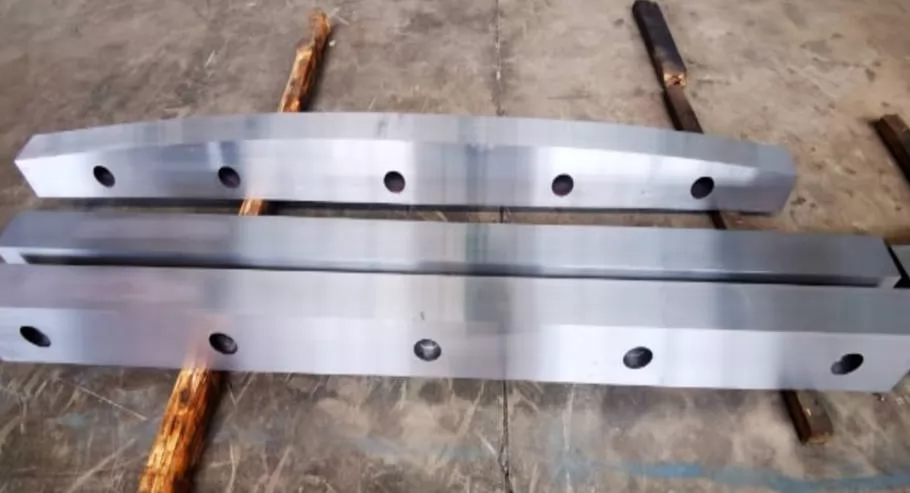
Proper daily maintenance is essential to maximize the service life of shearing machine blades. Key practices include regularly cleaning the blade surface to remove metal residue and prevent corrosion, timely sharpening of blunt cutting edges to reduce cutting resistance and maintain efficiency, and adjusting the blade clearance according to the thickness of the plates being cut. Additionally, operators should avoid overloading the blades by cutting ultra-thick or extra-hard plates beyond their designed capacity, which can cause permanent damage or premature failure.
The best shearing machine blades are those that perfectly match the material, specifications, and actual working conditions of your application. Rather than focusing only on the lowest price, prioritizing high-quality blades delivers superior long-term benefits through extended service life, smoother cuts, reduced downtime, and lower overall production costs.
To make a quick and informed purchasing decision, follow this practical checklist: confirm your shearing machine model and exact installation dimensions; clearly define the cutting material type and plate thickness; select the appropriate blade material according to your production frequency and intensity; verify the heat treatment process and hardness parameters (typically 54-62 HRC); and finally, evaluate the supplier’s qualifications along with their after-sales support and warranty terms.
High-carbon high-chromium alloy steel such as Cr12MoV, SKD11, D2 and H13 are the most ideal choices for shearing machine blades. For heavy-duty industrial shearing of thick steel plates, high-speed steel and tungsten alloy steel are also widely used. These materials feature high wear resistance, good toughness, strong impact resistance and excellent heat treatment stability, perfectly suitable for shearing carbon steel, stainless steel, alloy steel and other metal materials.
The service life depends on the sheared material, plate thickness, cutting frequency and blade material. Under normal working conditions:
For shearing ordinary carbon steel: 50,000–150,000 cuts;
For stainless steel and high-strength alloy steel: 20,000–80,000 cuts;
With regular grinding and proper maintenance, the overall usable life can be extended by 30%–50%.
The optimal hardness range for metal shearing blades is HRC 58–62.
HRC below 58: Insufficient hardness, easy to wear and edge collapse;
HRC above 62: Higher brittleness, prone to cracking and chipping under impact shearing.
For stainless steel and high-tensile steel plates, keep the hardness at HRC 60–62 for the best balance of wear resistance and toughness.
It is not recommended to share one blade for stainless steel and carbon steel. Stainless steel has high toughness, strong abrasiveness and greater shearing resistance, which will accelerate blade wear and cause edge micro-damage. If you then shear carbon steel with the same blade, it will lead to burrs, uneven cuts and shortened blade life. It is better to use special blades separately configured for stainless steel and carbon steel to guarantee cutting quality and blade durability.





Fastest
Installation

Top-Notch
Equipment

24/7 Customer
Support

100% Secured
Payment




.png)
.png)

.png)